How Can Competitor Email Monitoring Improve Email Marketing Strategies?
How do successful businesses stay ahead of competitors in email marketing? What makes their promotional emails, newsletters, and product announcements so effective? The answer often lies in competitor email monitoring. By observing competitors' email campaigns, businesses can discover new marketing ideas, understand industry trends, and identify opportunities to improve their own email strategies.
***[Competitor email monitoring](https://mailgaze.com/email-competitor-monitoring-and-alerts-for-affiliates-2026/
)*** is the process of tracking and analyzing emails sent by competing businesses to understand their marketing activities. It helps marketers evaluate promotional techniques, subject lines, email frequency, content formats, and special offers. These insights allow businesses to make smarter decisions, create more engaging campaigns, and improve customer communication.
What Is Competitor Email Monitoring?
Competitor email monitoring involves collecting and analyzing publicly received marketing emails from competing brands. It helps businesses understand how others communicate with subscribers, promote products, and encourage customer engagement.
Instead of guessing which email strategies might work, marketers can study real campaigns and identify useful patterns.
Common elements to monitor include:
Subject Lines: Understand how competitors attract attention and encourage email opens.
Email Design: Analyze layouts, images, colors, and overall presentation.
Promotional Offers: Track discounts, seasonal deals, and exclusive promotions.
Sending Frequency: Observe how often competitors communicate with subscribers.
Call-to-Action (CTA): Identify how brands encourage customers to click, shop, or sign up.
This information provides valuable direction for improving your marketing approach.
How Can Competitor Email Monitoring Improve Email Marketing Strategies?
Competitor email monitoring helps businesses improve their marketing strategies by revealing successful campaign patterns, identifying market opportunities, and providing fresh content ideas. Here are six important ways it can support better email marketing results.
1. Discover New Email Campaign Ideas
Monitoring competitor emails helps marketers discover creative ways to communicate with their audiences. You can explore different newsletter formats, product announcements, welcome emails, and promotional campaigns.
For example, if competitors regularly use seasonal promotions or limited-time offers, you can explore similar campaign opportunities while creating original content for your audience.
2. Improve Email Subject Lines
Subject lines play an important role in attracting subscribers' attention. By analyzing competitors' subject lines, marketers can discover effective writing styles, promotional language, and personalization techniques.
Consider monitoring:
Short and attention-grabbing headlines.
Personalized subject lines.
Curiosity-driven messaging.
Urgency-based promotional phrases.
Use these observations to test different subject lines and identify what resonates with your subscribers.
3. Understand Competitors' Promotional Strategies
Competitor monitoring makes it easier to understand how other businesses promote their products and services. You can track discount announcements, product launches, limited-time deals, and seasonal campaigns.
These insights help businesses identify promotional trends and develop offers that match customer interests without simply copying competitors.
4. Identify Industry Trends and Opportunities
Email marketing trends change as customer expectations and market conditions evolve. Monitoring competitor campaigns helps businesses recognize emerging themes, popular content formats, and changing promotional approaches.
For example, observing how brands introduce new products or highlight customer benefits can inspire fresh campaign concepts.
Using these insights as your primary research direction can help you develop more relevant and competitive marketing strategies.
5. Strengthen Email Content and Design
An effective email needs more than an attractive subject line. Its content, structure, visuals, and CTA should work together to encourage action.
By studying competitor emails, marketers can identify:
Effective email layouts and content structures.
Engaging product descriptions.
Attractive promotional banners.
Clear and persuasive CTAs.
Mobile-friendly design approaches.
These observations can guide improvements to your own email templates and overall subscriber experience.
6. Make Smarter Marketing Decisions
Competitor email monitoring provides practical information that supports better campaign planning. Instead of relying entirely on assumptions, marketers can compare industry approaches and identify areas where their campaigns need improvement.
Combine competitor research with your own performance data, such as open rates, click-through rates, and conversions. This helps you understand which changes are actually improving results.
What Are the Best Practices for Competitor Email Monitoring?
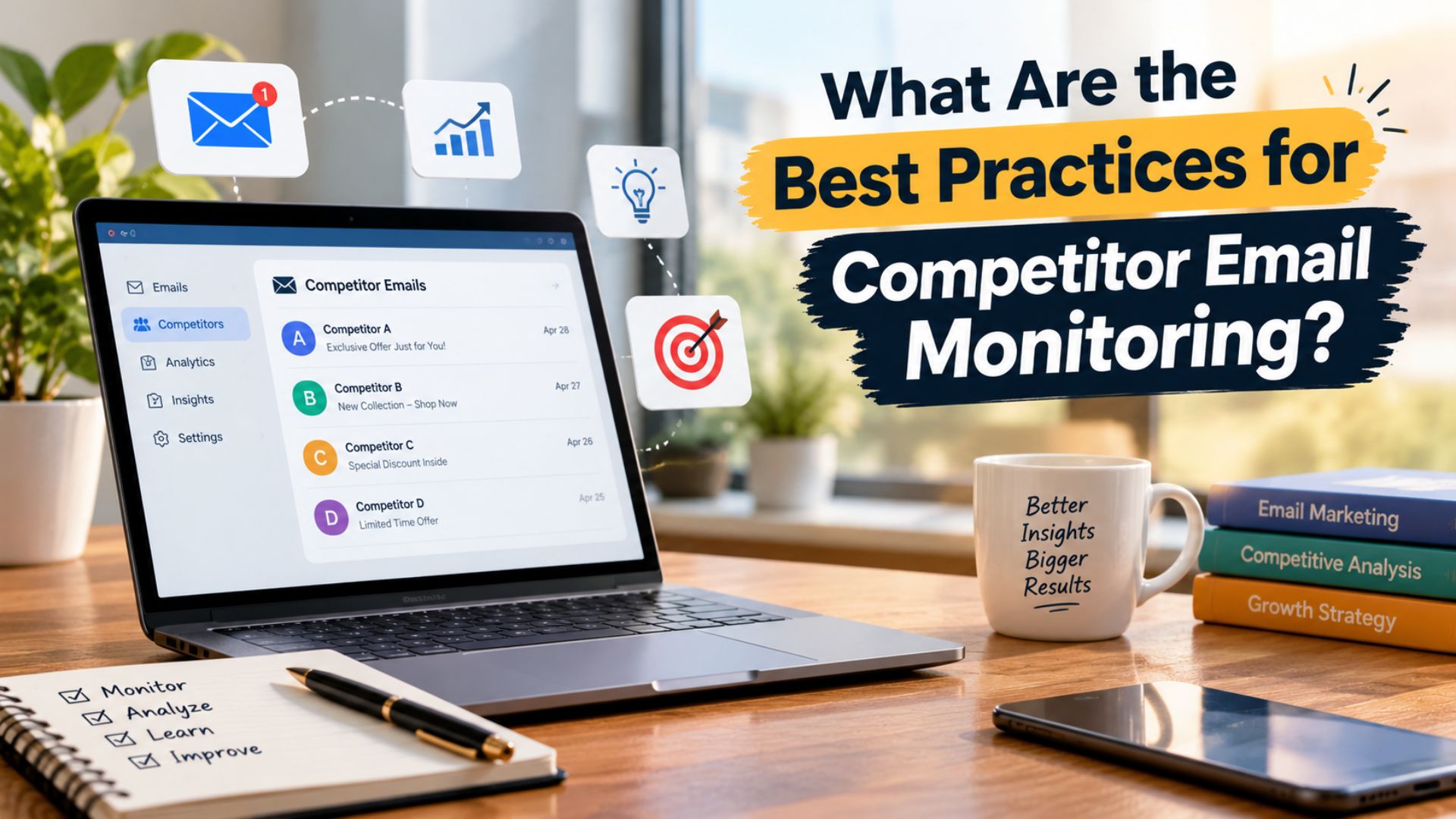
To get meaningful insights from competitor research, businesses should follow a consistent monitoring process.
Select Relevant Competitors: Focus on businesses targeting similar audiences or operating in the same industry.
Create Dedicated Email Accounts: Use separate inboxes to organize competitor newsletters and promotional emails.
Track Campaign Activities: Record subject lines, sending dates, promotional offers, and email formats.
Analyze Recurring Patterns: Identify frequently used marketing techniques and emerging trends.
Apply Useful Insights: Test original ideas in your campaigns and measure their performance.
Review Results Regularly: Update your research to stay informed about competitors' changing strategies.
You can also explore KW 1 to discover additional approaches to understanding email marketing activities and campaign performance.
Which Tools Help With Competitor Email Monitoring?
Specialized email monitoring tools make it easier to collect, organize, and analyze competitor marketing emails. They can help marketers review campaign examples, compare promotional messages, and discover useful marketing patterns.
When selecting a tool, consider features such as:
Email campaign tracking.
Competitor newsletter archives.
Searchable email collections.
Campaign design analysis.
Promotional trend discovery.
For businesses researching email advertising strategies, platforms such as MailGaze can help discover marketing campaigns and explore competitor email examples for inspiration.
How Can Businesses Turn Competitor Insights Into Better Results?

Collecting competitor emails is only the first step. The real value comes from applying useful observations to your own campaigns.
Start by identifying weaknesses in your current email strategy. Compare your messaging, design, promotional approach, and sending frequency with relevant industry examples.
Next, choose one improvement at a time. Test different subject lines, experiment with email layouts, or introduce new promotional formats. Measure the results using your email marketing analytics.
This approach helps businesses use competitor research to create original campaigns that better serve their audiences.
Exploring KW 2 can also provide further ideas for developing stronger email marketing practices and improving campaign effectiveness.
Summary
***[Competitor email monitoring](https://mailgaze.com/email-competitor-monitoring-and-alerts-for-affiliates-2026/
)*** helps businesses understand how competing brands communicate with customers, promote products, and organize marketing campaigns. By analyzing subject lines, email designs, promotional offers, and campaign frequency, marketers can discover new ideas and identify opportunities for improvement.
Consistent research combined with performance testing can help businesses build more engaging email campaigns, improve customer relationships, and achieve better marketing results.
Frequently Asked Questions (FAQs)
1. What is the main purpose of competitor email monitoring?
Its main purpose is to analyze competitors' email marketing activities and identify useful insights for improving your own campaigns.
2. What should businesses monitor in competitor emails?
Businesses should monitor subject lines, email content, promotional offers, design, sending frequency, and calls to action.
3. How often should you monitor competitor email campaigns?
Weekly monitoring is a useful starting point. However, businesses can review important campaigns more frequently during seasonal promotions and product launches.
4. Can competitor email monitoring increase conversions?
Yes. It can help businesses discover effective promotional approaches and improve their email content. However, conversion improvements depend on testing and audience response.
5. Is competitor email monitoring useful for small businesses?
Yes. Small businesses can use competitor insights to discover affordable campaign ideas, understand industry trends, and improve their email marketing strategies.